PROBLEM: The Town took out large loans to expand the water and sewer plant capacity, $24.8M and $48.5M respectively, $73.3M combined. (Previously 2 million gallons per day (MGD), now at 4.2 MGD). This helped solve the capacity issue. But it has created a new issue = high water bills because someone has to pay for the loans. According to 2026 budget numbers, the water plant loan is $1.3M/yr and the sewer plant loan is $2.4M/yr.
My Plan to Lower Water Bills
1. Decrease expenses (Balance the Budget) - short term solution to provide immediate relief to residents. Stop the bleeding. Click HERE for details.
2. Increase revenue (Reduce Regulations) - long term solution. My goal is to find out what are the barriers that are making it difficult to build in Wellington and then to remove, reduce, or streamline processes in order for more building to happen here. More builds = more tap/impact fees and more customers = more revenue = lower water bills. Click HERE for details.
2. Increase revenue (Reduce Regulations) - long term solution. My goal is to find out what are the barriers that are making it difficult to build in Wellington and then to remove, reduce, or streamline processes in order for more building to happen here. More builds = more tap/impact fees and more customers = more revenue = lower water bills. Click HERE for details.
1. Balance the Budget
Short Term SOLUTION:
Before raising rates, we should:
1. Cut unnecessary expenses FIRST
2. Freeze non-essential raises FIRST
3. Delay capital projects FIRST
4. Remove barriers to development FIRST (more builds = less burden on users)
5. THEN—only if necessary—talk about rate increases
Click HERE for more details on how to balance the budget.
Before raising rates, we should:
1. Cut unnecessary expenses FIRST
2. Freeze non-essential raises FIRST
3. Delay capital projects FIRST
4. Remove barriers to development FIRST (more builds = less burden on users)
5. THEN—only if necessary—talk about rate increases
Click HERE for more details on how to balance the budget.
I do NOT support cutting customer facing services. I do NOT agree with Loveland who cut fireworks, lake access, and library hours. As spelled out above, all cuts are behind the scenes.
2. Reduce Regulations
Long term SOLUTION:
We need more customers to spread out the cost of the loan repayments. More customers = lower water bills.
My goal is to find out what barriers (other than tap fees) are keeping businesses and developers from building here and then to reduce, remove, or streamline processes in order to increase development in Wellington. From what I've heard so far, it is not the cost of tap fees that are keeping builders from our Town. Builders need to help pay for the infrastructure by paying tap fees, so I'm not talking about removing these. It would seem that there are other requirements that the town is imposing on builders that make it difficult to build here, such as expensive traffic studies, oversizing water mains, and extensive inspections.
Click HERE for a more detailed plan to reduce costs for development.
We need more customers to spread out the cost of the loan repayments. More customers = lower water bills.
My goal is to find out what barriers (other than tap fees) are keeping businesses and developers from building here and then to reduce, remove, or streamline processes in order to increase development in Wellington. From what I've heard so far, it is not the cost of tap fees that are keeping builders from our Town. Builders need to help pay for the infrastructure by paying tap fees, so I'm not talking about removing these. It would seem that there are other requirements that the town is imposing on builders that make it difficult to build here, such as expensive traffic studies, oversizing water mains, and extensive inspections.
Click HERE for a more detailed plan to reduce costs for development.
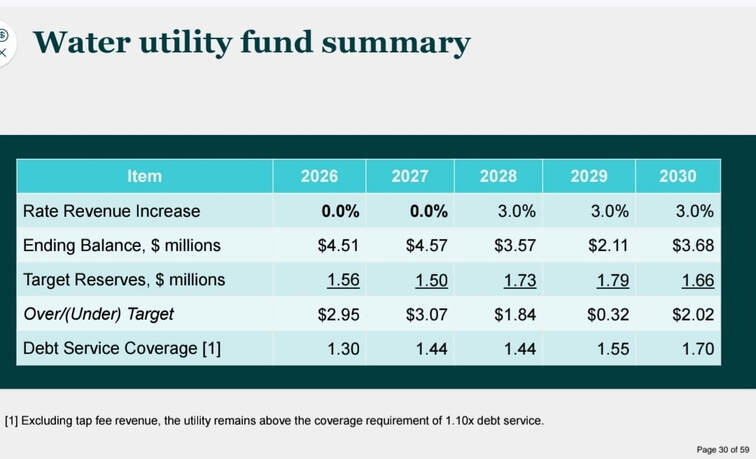
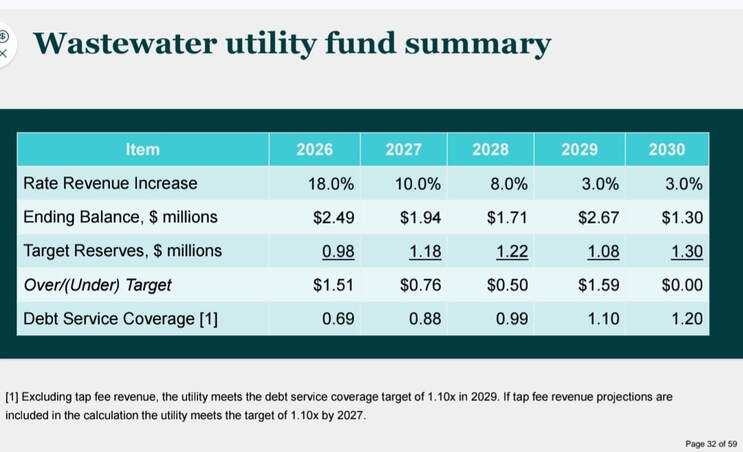
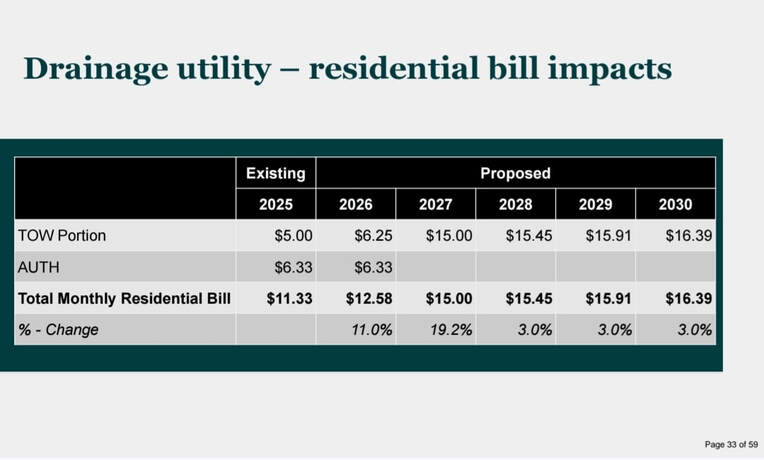
Planned increases over the next 5 years
Town Water Usage
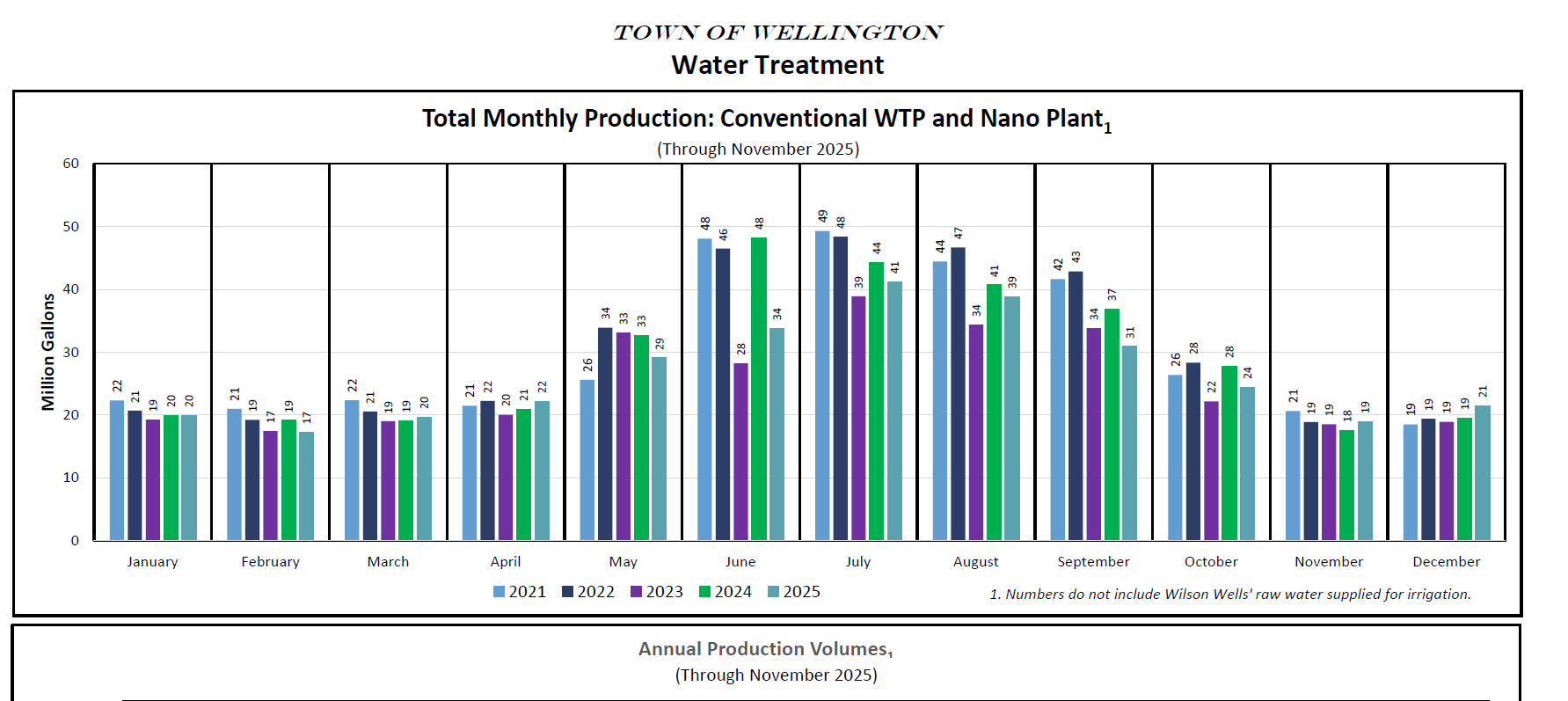
The chart below shows how much water the Town is using a month. Let's take 49 MG from July 2021, divide by number of days in the month, 31, and you get the average MGD. In this case, it's 1.6 MGD. Our plant capacity is now at 4.2 MGD for comparison.