Growth
What we need now is growth, but we are making that harder than it needs to be.
The development process can take up to three years before anyone breaks ground. Our requirements are sometimes twice as restrictive as neighboring communities. We mandate 13 inspections while other towns use a risk-based model scaled to contractor history and project scope. We require traffic impact studies at 50 trips while surrounding communities set that threshold at 100. We require 8-inch water and sewer pipes where smaller pipes would suffice.
Businesses have said that traffic studies, parking requirements, sprinkler system requirements, and grease trap regulations are the four biggest barriers to building here. On parking alone, current standards require paved lots with lighting and drainage plans that can cost nearly as much as the building itself. Beyond parking, sprinkler systems cost $40,000 and grease interceptors cost $30,000, very expensive barrier for small businesses. When regulations are expensive, businesses go elsewhere.
LOWER barriers mean more businesses can afford to come to Wellington. Fewer barriers, faster timelines, and fairer standards mean more businesses, more sales tax revenue, and a more thriving Wellington.
The development process can take up to three years before anyone breaks ground. Our requirements are sometimes twice as restrictive as neighboring communities. We mandate 13 inspections while other towns use a risk-based model scaled to contractor history and project scope. We require traffic impact studies at 50 trips while surrounding communities set that threshold at 100. We require 8-inch water and sewer pipes where smaller pipes would suffice.
Businesses have said that traffic studies, parking requirements, sprinkler system requirements, and grease trap regulations are the four biggest barriers to building here. On parking alone, current standards require paved lots with lighting and drainage plans that can cost nearly as much as the building itself. Beyond parking, sprinkler systems cost $40,000 and grease interceptors cost $30,000, very expensive barrier for small businesses. When regulations are expensive, businesses go elsewhere.
LOWER barriers mean more businesses can afford to come to Wellington. Fewer barriers, faster timelines, and fairer standards mean more businesses, more sales tax revenue, and a more thriving Wellington.
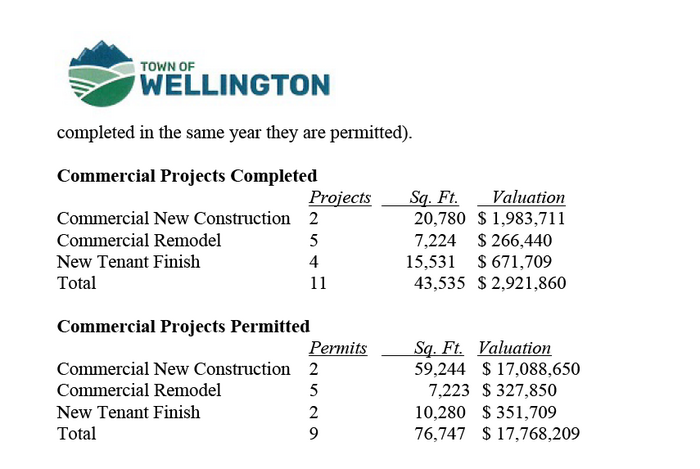
The above chart shows how many businesses were completed or pulled permits in 2025
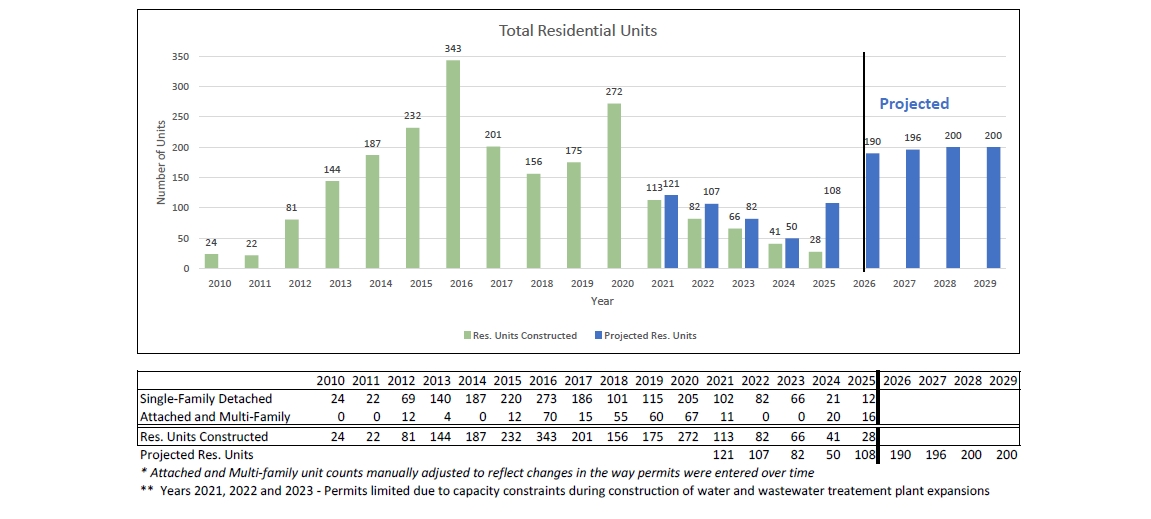
The above chart shows how many homes were built in previous years.
WELLINGTON DEVELOPMENT COMPARISON
Comparison with Peer Communities: Berthoud, Johnstown, Windsor
KEY FINDINGS
Wellington is UNIQUE in requiring:
PROPOSED SOLUTIONS
Match peer community standards by adopting:
HOW TO VERIFY THIS ANALYSIS
1. Code Documents Available At:
Sources:
Looked at municipal codes and development standards for 50-lot single-family subdivision:
Comparison with Peer Communities: Berthoud, Johnstown, Windsor
KEY FINDINGS
Wellington is UNIQUE in requiring:
- Full TIS (Traffic Impact Study) at 50 peak-hour trips (peers: 100-250 trips)
- 20-year TIS horizon for all projects (peers: optional for small projects)
- LOS (Level of Service) C standard (peers: LOS D/E acceptable) - a measure of how well an intersection is operating. C is a higher standard.
- Mylar reproducible submittals (peers: digital and hard copy)
- 8" water mains universally (Berthoud: allows 4" for residential)
PROPOSED SOLUTIONS
Match peer community standards by adopting:
- ✓ 100-trip TIS threshold
- ✓ Optional 20-year horizon for small projects
- ✓ LOS D/E standards (match Johnstown/Windsor)
- ✓ Digital and/or hard copy submittals
- ✓ 6-inch water mains where hydraulically appropriate
HOW TO VERIFY THIS ANALYSIS
1. Code Documents Available At:
- Wellington: www.wellingtoncolorado.gov/DocumentCenter/View/1299/
- Berthoud: www.berthoud.org/DocumentCenter/View/3676/
- Johnstown: www.johnstownco.gov/363/Design-and-Construction-Standards
- CDOT Standard Costs (turn lanes, signals)
- RS Means Cost Data (construction materials)
- ITE Trip Generation Manual (traffic study thresholds)
- Local civil engineering firms (hourly rates, typical fees)
- ICON Engineering
- Galloway & Company
- Northern Engineering
- Scholl Engineering
Sources:
Looked at municipal codes and development standards for 50-lot single-family subdivision:
- Wellington: Municipal Code Ch. 15 (Land Use Code), Standard Design Criteria (March 2015)
- Berthoud: Engineering & Infrastructure Standards (October 2021)
- Johnstown: Design & Construction Standards (2022)
- Windsor: Design Criteria & Construction Specifications (2010)
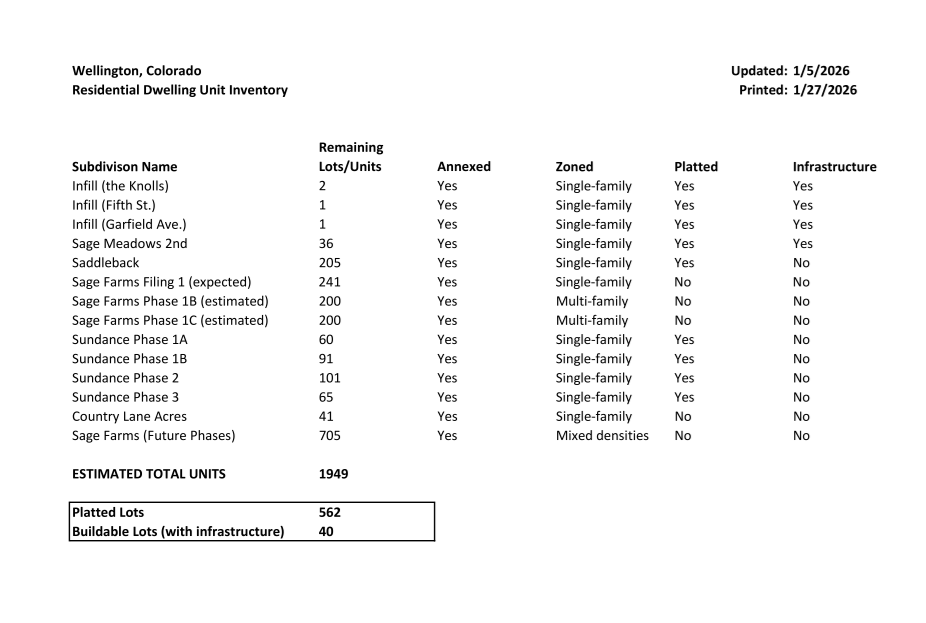
Above chart shows how many residential lots have started the process to build in Wellington
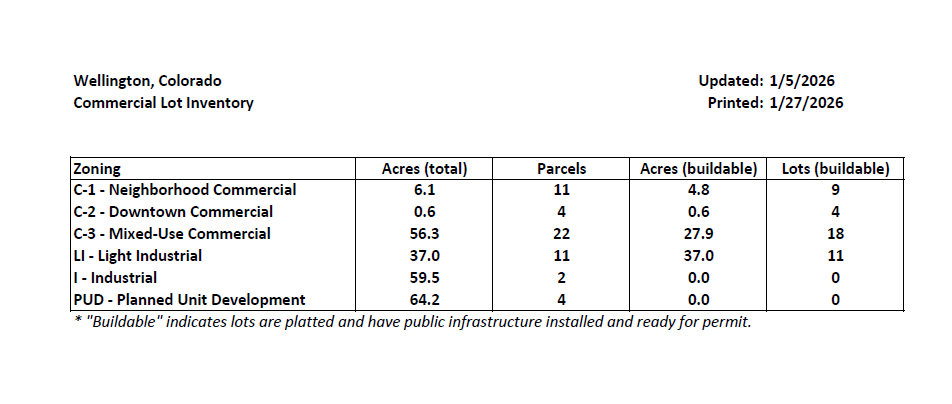
Above chart shows how many commercial lots are available